Know your guests. Citable builds your buyer personas and reconstructs the questions each is likely to ask AI about your destination and category.
Travel: when travellers ask AI where to stay, is your business in the answer?
Citable shows how often AI names you next to your competitors.
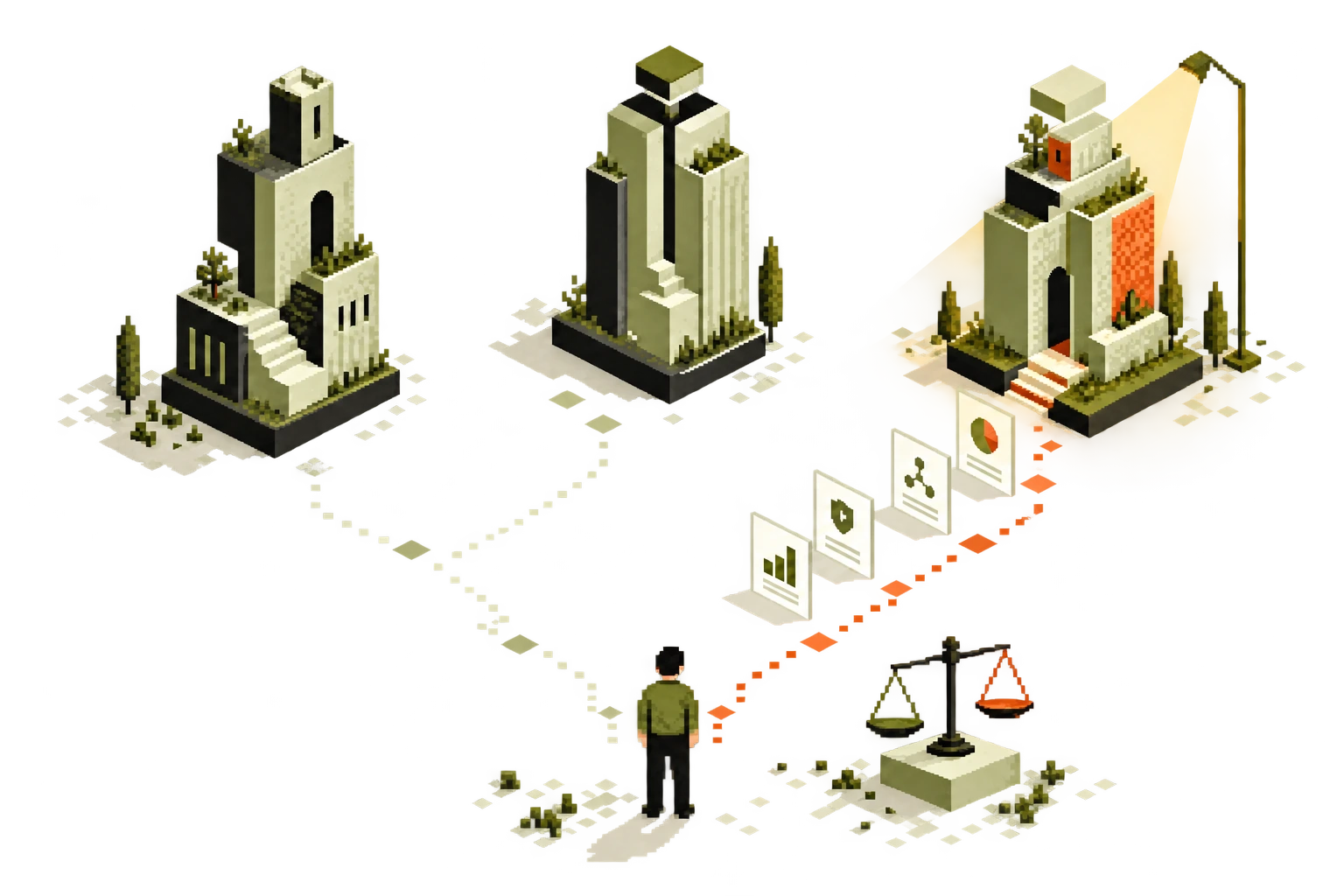
What AI answers name and cite today
When asked on Oct 26, 2026, with no persona (method below):
- "best carry-on suitcase": Travelpro and Away were each named in at least 12 of 12 answers, and Samsonite in 7. The most-cited sources were goodhousekeeping.com, travel.yahoo.com, forbes.com and bestreviews.com (3 answers each).
- "best small-group tour companies in Japan": Intrepid Travel was named in at least 12 of 12 answers, InsideJapan Tours in 10 and G Adventures in 9. The most-cited sources were tourradar.com and insidejapantours.com (3 answers each).
- "best boutique hotels in Lisbon": ChatGPT named Memmo Alfama and The Vintage Lisbon in all 3 of its answers. Google AI Overview named neither; in both of its answers it named IHG, Four Seasons Hotel Ritz Lisbon and JO&SO instead.
Sources counted are from Google AI Overview, Perplexity and Gemini answers; ChatGPT's logged-out answers cite none.
What this shows: for luggage and Japan tours, two or three names appear in most answers. For Lisbon hotels, different assistants named entirely different businesses.
Method: ChatGPT and Google AI Overview: real logged-out answers. Perplexity and Gemini: API (sonar, Gemini Flash). 3 runs each, Oct 26, 2026. Answers can differ by account and location. Counts are a lower bound: "at least" means a name our parser may have missed isn't counted.
When someone asks ChatGPT, Google's AI answers or Perplexity where to stay, which tour to take or which suitcase to buy, the answer names a few businesses and leaves out the rest. Citable shows you which questions your guests and customers are likely to ask, which brands AI names in the answers today, and what to change on your pages.
The season
January to March
"January is the peak booking time for many travellers," Skyscanner said of UK travellers in January 2024.
- In the UK, January is a peak booking month. Skyscanner: "January is the peak booking time for many travellers," with its highest-ever single week of redirects, a proxy for bookings, in the first week of January 2024 (Travolution, Jan 11, 2024).
- For cruises, January to March is "Wave" season. Royal Caribbean said "the first weeks of Wave, the key January-to-March booking period when cruise operators roll out exclusive deals, were among its strongest ever" (Baird Maritime, Jan 29, 2026).
What that means for timing: pages need time to be found before travellers start asking, so we recommend publishing by mid-November.
How a campaign works for a travel brand
Find where AI names others. Every week, Citable tests those questions across AI assistants and shows which businesses are named and which pages are cited instead of yours.
Fix the pages. Citable drafts the content and page changes for your team to approve. By default, nothing is published.
Measure the result. Citable shows AI visits, and the bookings your Google Analytics records as purchases.
Questions travel brands are likely to ask about AI
How do hotels get recommended by ChatGPT?
Make the facts travellers ask about (where it is, who it suits, what a room includes, how it compares) complete and current on your own pages and wherever AI reads about you.
How can a boutique hotel show up when travellers ask AI where to stay?
Find out which versions of that question your guests are likely to ask (by neighbourhood, by trip type, by budget, by season) and what AI answers say today. Then publish pages that answer them directly, with facts an assistant can quote: location and distances, room types and sizes, what's included, accessibility, policies, and rates or rate ranges. Answers change from one run to the next, so judge progress by the trend across many runs, not one screenshot.
How do tour operators get more direct bookings from AI search?
Be the clearest answer to the specific question: the itinerary, group size, pace, what's included and what isn't, dates, and price. A traveller comparing small-group tours needs those facts in text on your own page, not only in a PDF or a booking widget. Citable shows which tour questions AI answers today, and who it names.
Why does ChatGPT recommend booking sites instead of my hotel's own website?
AI answers lean on the sources they cite. When the same pages are cited again and again, the same sites tend to come back. Booking sites are also a large channel: in the US, Phocuswright puts the online split between OTAs and hotel direct channels at "52 to 48 percent" (Asian Hospitality, July 2026, citing Phocuswright). Your own site gets in by answering the question better than a listing page does.
How do I find out what AI assistants say about my hotel or resort?
Ask the assistants the questions your guests would ask, many times, on more than one assistant, and record who is named and which sources are cited. Doing it by hand gives you a snapshot. Citable runs your tracked questions every week (ChatGPT on Audit; ChatGPT, Perplexity and Gemini on Optimize; any 3 of 6 assistants on Grow) and shows which businesses are named instead of yours.
What do travellers ask AI before booking a trip?
People compare options before a trip they care about. Citable reconstructs the questions your guests and customers are likely to ask for your destination, category and personas, then tests them across AI assistants every week.
How can a travel brand get found by AI without paying more to OTAs?
Publish the answers on your own site. Direct bookings can be worth more per booking: SiteMinder found that "hotel websites generated an average of US$516 per booking in 2025, well above wholesalers (US$445), global distribution systems (US$392) and OTAs (US$312)" (SiteMinder Hotel Booking Trends, 2025 data). Being named in AI answers is a way for a traveller to reach your own site before a listing.
How do I track bookings that came from ChatGPT or Perplexity?
ChatGPT adds utm_source=chatgpt.com to the links it sends to websites, so those visits show up in your analytics. With Google Analytics connected, Citable shows AI visits, and bookings where your Analytics records them as purchases. Bookings made on a separate booking engine count only if that engine passes them to your Analytics as purchases.
How do luggage brands get recommended when people ask AI which suitcase to buy?
Put the facts buyers compare in text on the product page: dimensions, weight, capacity, airline carry-on fit, materials, wheels, warranty and price. Use the words buyers use in their questions ("carry-on", "for international travel"). If you sell on Shopify, OpenAI says product data from Shopify Catalog is "already integrated into ChatGPT" (OpenAI Help Center), so the data in your store has to be right.
What's the best marketing tool for a travel brand to show up in AI answers?
Pick on three things: whether it tracks the questions your guests are likely to ask (not just your brand name), whether it covers the assistants they use, and whether it tells you what to change. Citable does all three: it finds where AI names other businesses, drafts the content and page changes for your team to approve, and shows AI visits and bookings in Google Analytics terms (see above).
FAQ
Which AI assistants does Citable check?
The free report checks ChatGPT. Paid plans check every week: ChatGPT on Audit; ChatGPT, Perplexity and Gemini on Optimize; any 3 of ChatGPT, Perplexity, Google AI Overview, Gemini, Claude and Grok on Grow.
When should I start for January?
By mid-November, so your pages are in place before January.
Does Citable count enquiries?
Not yet. Citable shows bookings where your Google Analytics records them as purchases.
Does Citable change my site?
Citable drafts the changes for your team to approve. By default, nothing is published.